

QUICK ANSWER
The Federal Reserve raised its benchmark rate on September 16, 2026, its first hike in three years, and mortgage rates rose right along with it instead of falling. The 30 year fixed jumped from about 6.74% to just over 7% and has held near 7.03% since. For Gilbert, Queen Creek, Chandler, Mesa, and San Tan Valley buyers, the practical move now is planning around today’s rate rather than waiting for a drop that isn’t on the calendar.
INTRODUCTION
I have had the same conversation about a dozen times in the last week, and it usually starts the same way. A buyer tells me they were waiting for rates to come down before they got serious, and then they ask why their lender just quoted them something higher than what they saw a month ago. The short version is that the Fed raised rates on September 16, its first increase in three years, and a lot of people assumed that meant mortgage rates would follow the old pattern and ease up. Instead they climbed.
That gap between what people expect the Fed to do and what actually happens to their mortgage quote is where most of the confusion lives right now. I am seeing it constantly with buyers here in Gilbert, Queen Creek, Chandler, Mesa, and San Tan Valley, especially the ones who paused their search over the summer hoping for relief. So instead of another generic “rates went up” post, I want to walk through what actually happened, why it happened, and what it means for your specific search in the East Valley right now.
WHY DID THE FED RAISE RATES ON SEPTEMBER 16, AND WHY DID MORTGAGE RATES GO UP TOO?
On September 16, the Federal Reserve voted unanimously to raise its benchmark rate a quarter point, moving the target range to 3.75% to 4.00%. It was the Fed’s first hike in three years, and it caught a lot of people off guard because the recent conversation had mostly been about when rates might come down, not go up. The move was driven by inflation concerns that had picked back up, and Fed officials signaled that one more hike could still be on the table before the end of the year.
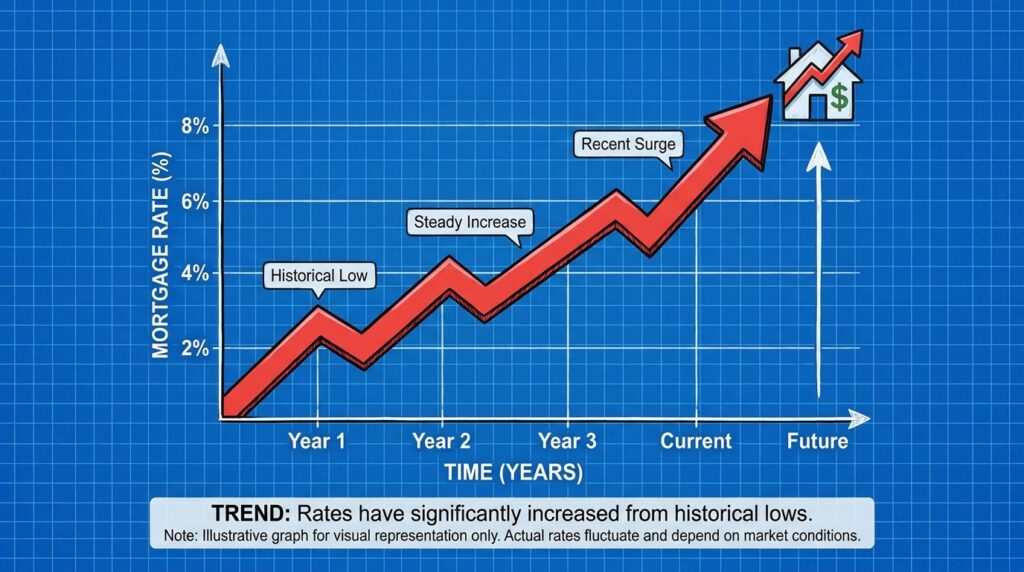
Mortgage rates responded almost immediately, but not in the direction most buyers were hoping for. According to Mortgage Daily’s rate tracking, the 30 year fixed climbed from about 6.74% in early September to just over 7% by the day of the Fed’s announcement, a jump of roughly 30 basis points in under two weeks. It has held in a narrow band between 7.01% and 7.04% since, sitting at 7.03% as of this week.
DOESN'T THE FED CONTROL MORTGAGE RATES DIRECTLY? WHY DID THEY MOVE BEFORE THE MEETING EVEN HAPPENED?
This is the part that trips people up, and it is worth explaining clearly because it comes up in almost every buyer conversation I have. The Fed does not set mortgage rates. It sets the short term rate banks charge each other overnight. Mortgage rates track the 10 year Treasury yield far more closely, and that yield moves on what investors expect inflation and Fed policy to look like months from now, not on the Fed’s decision the day it is announced.
That is exactly what happened here. The bond market had already priced in a hike before September 16 even arrived, which is why mortgage rates started climbing in early September rather than waiting for the official announcement. The 10 year Treasury closed at 5.11% on September 23, its highest close in at least a year, and that is the number actually driving what your lender quotes you, not the Fed funds rate itself.
ARE MORTGAGE RATES GOING TO HIT 7% AGAIN, OR GO EVEN HIGHER FROM HERE?
I want to be honest instead of giving you a comforting guess. Rates are already sitting at 7.03% as of this week, so the “will they hit 7%” question is really already answered. The more useful question is whether they climb meaningfully past that or settle in.
With the Fed signaling one more possible hike before year end and inflation still the driving concern, I would plan for rates to stay in this range, possibly with some short term movement in either direction, rather than betting on a quick return to the 6% range we saw earlier this year. Nobody, including me, can predict the bond market with certainty. What I can tell you is that waiting for a specific number that may not arrive has cost some of my clients real opportunities this year, both on price negotiation and on homes that got snapped up while they waited.
WHAT DOES THIS ACTUALLY MEAN FOR YOUR SEARCH IN GILBERT, QUEEN CREEK, CHANDLER, MESA, OR SAN TAN VALLEY?
It depends on where you are shopping, because rate sensitivity looks different city to city right now. In Gilbert, where inventory skews toward resale and buyers are already paying a premium for schools and location, a higher rate environment means monthly payment math matters more than ever when you are comparing a 2000s build in 85296 against something older and cheaper in 85233.
In Queen Creek and San Tan Valley, builders are still leaning on incentives, and this is exactly the environment where a rate buydown from a builder can be worth more than a price reduction. I have been walking new construction buyers through that math directly, because the difference between a permanent buydown and a temporary one changes the entire calculation over the life of the loan.
In Chandler, the split market I have written about before matters again here. Near the Price Road tech corridor, demand has stayed steady enough that higher rates have not slowed things down much. Away from the corridor, buyers have more room to negotiate, and a seller who understands that today’s rate is not going away might be more willing to talk credits or concessions than they would have been in July.
In Mesa, where value focused buyers and downsizers are already comparing it against pricier Gilbert and Chandler, the math at a higher rate makes Mesa’s price advantage even more meaningful on a monthly payment basis, not just on the sale price.
DOES A RATE HIKE CHANGE ANYTHING IF YOU ARE SELLING RIGHT NOW?
It changes the conversation more than it changes your strategy. Buyers who are still shopping at 7% are serious buyers. The ones who were only kicking tires waiting for a big rate drop have mostly stepped back, which means the people touring your home right now are closer to ready than they were a few months ago. That does not mean pricing carelessly, but it is worth knowing who you are actually negotiating with in this environment.
CONCLUSION
Here is where I land on this. Rates went up when a lot of people expected them to go down, and that is frustrating if you have been waiting on the sidelines. But a rate you can plan around today is worth more than a rate you are hoping shows up someday. If you want to actually run the numbers for your specific situation, whether that is a home in Gilbert, a new build in Queen Creek, or comparing Chandler against Mesa on a monthly payment basis, send me a message and I will walk through it with you honestly, including the parts that might mean waiting is actually the right call for you.
FREQUENTLY ASKED QUESTIONS
Why did mortgage rates go up after the Fed raised interest rates on September 16, 2026?
Mortgage rates rose because the bond market had already priced in the Fed’s rate hike before it was officially announced. Mortgage rates track the 10 year Treasury yield, not the Fed funds rate directly, and that yield climbed on inflation concerns tied to the Fed’s decision, pushing the 30 year fixed from about 6.74% to just over 7% in under two weeks.
Are mortgage rates going to hit 7% again in 2026?
Mortgage rates were already at 7.03% as of late September 2026, so they have already reached and held above that level. With the Fed signaling a possible additional hike before year end, rates are more likely to hold in this range than drop back toward 6% in the near term.
Should East Valley buyers wait for mortgage rates to drop before buying?
For most buyers, waiting on a specific rate that has no confirmed timeline means competing against fewer buyers today in exchange for an uncertain rate tomorrow. Builder incentives in Queen Creek and San Tan Valley, and more negotiating room in parts of Chandler and Mesa, can offset a higher rate in ways that are available right now but may not be later.
How does the Fed’s interest rate affect my mortgage rate in Gilbert or Chandler?
The Fed’s rate does not set your mortgage rate directly. It influences investor expectations, which move the 10 year Treasury yield, and mortgage rates follow that yield closely. That is why mortgage rates in Gilbert, Chandler, Queen Creek, Mesa, and San Tan Valley moved before the Fed’s meeting even happened, based on what the bond market expected the Fed to do.
Cheri Smith
REALTOR® | eXp Realty
480-298-5551
cherismithrealtor.com
@cherismith.azrealtor